Peer Review Process

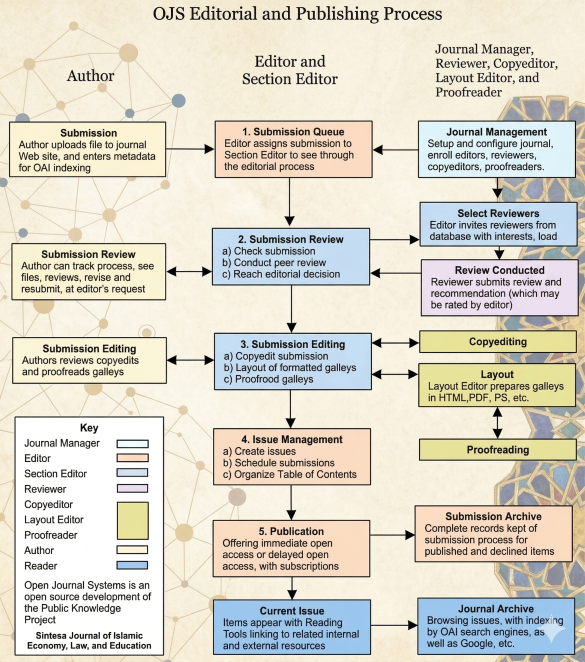
Nayara Journal of STEM Education and Innovation (NJSEI) applies a rigorous double-blind peer-review process to ensure the quality, originality, and academic integrity of all published manuscripts. In this system, the identities of authors and reviewers are kept confidential throughout the review process to maintain objectivity, fairness, and transparency. 

The peer-review process is conducted through the following stages:

  1. Manuscript Submission
    Authors submit their manuscripts through the journal’s online submission system. Submissions must comply with the journal’s author guidelines and formatting requirements.
  2. Initial Editorial Screening
    The Editorial Team evaluates the manuscript to ensure its relevance to the journal’s scope, adherence to submission guidelines, and basic academic quality. Manuscripts that do not meet these criteria may be rejected at this stage.
  3. Plagiarism Check
    All submitted manuscripts are screened using plagiarism detection software (e.g., Turnitin). Manuscripts with a high similarity index or suspected academic misconduct will be rejected or returned for revision.
  4. Editorial Assignment
    The Editor-in-Chief assigns the manuscript to a Managing Editor or Handling Editor who will oversee the review process.
  5. Reviewer Selection
    The assigned editor selects at least two independent reviewers with expertise relevant to the manuscript’s topic. Reviewers are invited to evaluate the manuscript within a specified timeframe.
  6. Double-Blind Peer Review
    The manuscript undergoes a double-blind review process, where both reviewers and authors remain anonymous. Reviewers assess the manuscript based on originality, methodological rigor, theoretical contribution, clarity, and relevance.
  7. Review Reports and Recommendation
    Reviewers provide detailed comments and recommendations, which may include:
    • Accept without revision
    • Minor revisions required
    • Major revisions required
    • Resubmit for review (conditional rejection)
    • Reject
  8. Editorial Decision
    Based on the reviewers’ reports and editorial judgment, the editor makes a decision and communicates it to the authors. In some cases, additional reviewers may be consulted.
  9. Revision by Authors
    Authors are required to revise their manuscripts according to the reviewers’ comments and resubmit within the given timeframe. A response to reviewers is usually required to explain revisions made.
  10. Re-evaluation (if necessary)
    Revised manuscripts may be sent back to the original reviewers for further evaluation, especially in cases of major revisions.
  11. Final Decision
    The Editor-in-Chief makes the final decision regarding acceptance or rejection based on the revised manuscript and reviewers’ feedback.
  12. Copyediting and Proofreading
    Accepted manuscripts undergo copyediting and proofreading to ensure clarity, consistency, and adherence to journal style.
  13. Publication
    The final version of the manuscript is published in the scheduled issue. The order of publication is determined based on the acceptance date and editorial considerations.

Review Timeline

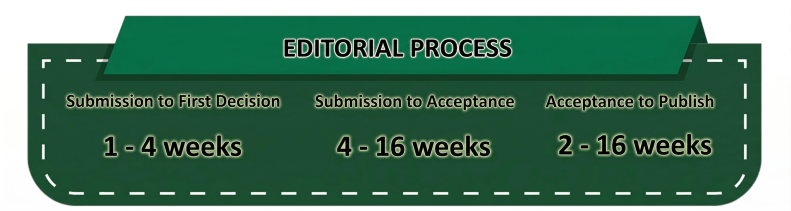
The entire review process typically takes approximately 8–16 weeks, depending on the responsiveness of reviewers and authors.  The estimated time for each stage is as follows:
As explained in publication ethics, we ensure that the reviewed manuscript is treated confidentially before publication. Each stage of this review process is described as follows: